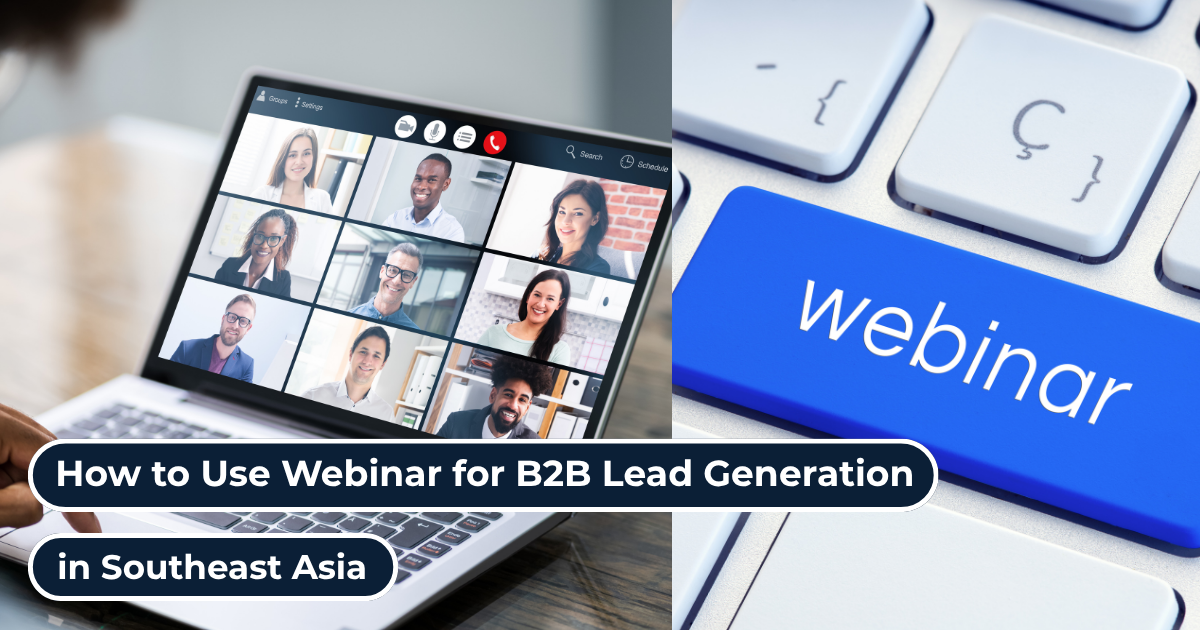
In most B2B markets, webinars have evolved from “nice‑to‑have” marketing activities into one of the most consistent sources of high‑intent leads. Yet many companies entering Southeast Asia still treat webinars as one‑off events, hoping for sign‑ups without building a repeatable engine around them.
Across recent benchmark studies, the average webinar live attendance rate now sits around 40–50%, with total attendance (including replays) reaching close to 57% and conversion rates into desired actions often above 60% when the experience is well designed. At the same time, a large share of B2B marketers say webinars produce some of their best‑quality leads, confirming their role as a core channel rather than a side tactic.
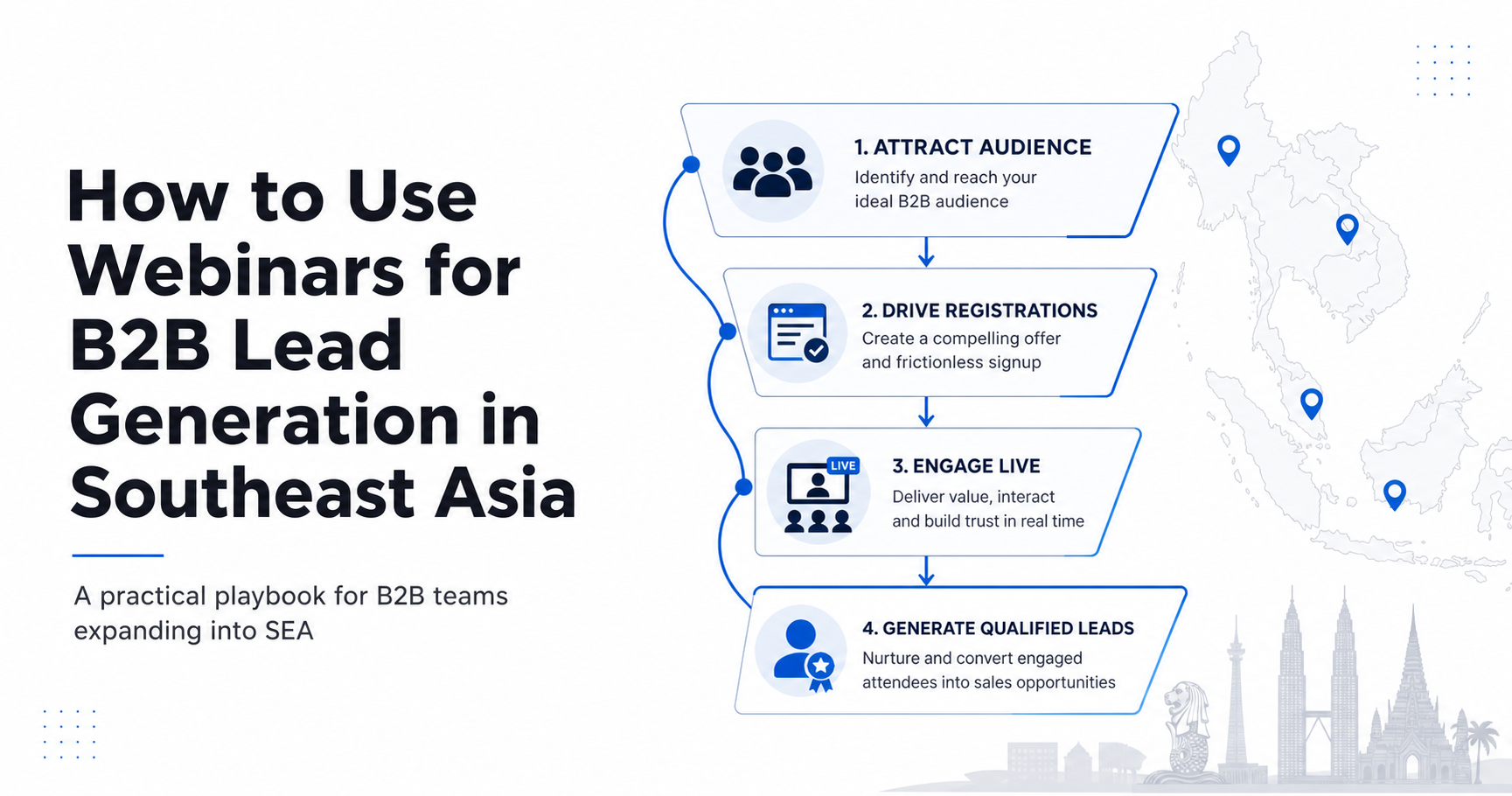
This article gives you a practical playbook for using webinars as a B2B lead generation engine specifically in Southeast Asia: who this approach works for, how to diagnose your current webinar efforts, how to design a region‑appropriate format, and how to execute and follow up so that sign‑ups become qualified opportunities. It is written for marketing and sales leaders at B2B SaaS, IT, and professional services companies expanding into SEA, and it shows where a partner like Expand In Asia can help design, run, and continuously optimize this program.
- TL;DR — Key Takeaways
- Treat webinars as a recurring channel, not one‑off events – define your ideal customer profile (ICP), topics, and cadence for Southeast Asia to steadily grow a high‑intent audience.
- Design for engagement, not just registrations – use interactive elements (polls, Q&A, chat) and localized examples to keep SEA attendees active throughout the session.
- Align webinar workflows with your sales process – build clear hand‑offs from registration to follow‑up sequences and qualification, so reps focus on the right leads.
- Measure the full funnel, not just attendance – track registration, show‑up rate, engagement, meetings booked, and pipeline influenced to understand true ROI.
- Localize content and timing for SEA markets – adapt topics, language, time zones, and compliance messaging (e.g., data privacy) to each country’s expectations.
If you only do one thing: align your webinar topics and follow‑up sequences with a clearly defined Southeast Asia ICP and pipeline goal, then repeat the format on a regular cadence.
Who This Is For (and Not For)
This webinar playbook is for B2B companies that sell complex products or services and need to educate buyers before they speak to sales, such as SaaS platforms, IT managed services, or consulting offerings entering Southeast Asia. It works best when your deals involve multiple stakeholders, relatively high contract values, and longer sales cycles that benefit from deeper content.
It is particularly useful for teams already running content such as whitepapers or LinkedIn campaigns, but who lack a structured webinar process connected to CRM workflows and sales outreach. It is not ideal for very low‑touch, low‑ticket offers where buyers prefer self‑serve sign‑ups and quick trials, or for brands unwilling to invest in consistent follow‑up and localization for SEA audiences.
Diagnose your current webinar program
Start by understanding where your current webinars succeed and where they fall short. This diagnosis should cover your funnel metrics, audience fit, and operational setup.
What to measure
Registration volume and source (email, paid, partners, LinkedIn, etc.).
Live attendance rate and total attendance including on‑demand views.digitalwebsolutions.
Engagement metrics: average viewing time, poll participation, Q&A volume, resource downloads.
Post‑webinar outcomes: meetings booked, sales conversations started, qualified opportunities created, and revenue influenced.
Mini checklist
| Area | Questions to ask |
|---|
| Area | Questions to ask |
|---|---|
| Audience fit | Are registrants within your SEA ICP (role, industry, company size, geography)? |
| Promotion strategy | Do you use targeted lists, local partners, and SEA‑relevant channels (e.g. LinkedIn, email)?hubspot |
| Experience & engagement | Are webinars interactive and mobile‑friendly, with clear CTAs?goto |
| Follow‑up & qualification | Do you have structured sequences for leads based on engagement signals? |
| Measurement & reporting | Can you attribute pipeline and revenue to specific webinars?digitalapplied |
If your answers reveal gaps—for example, great registration but weak follow‑up or limited SEA attendance—capture these as problems to fix in your new approach.
Design a SEA‑ready webinar approach
With your current state mapped, design a framework that reflects how decision‑makers in Southeast Asia discover content, sign up for events, and engage with vendors.
Clarify your ICP and themes
Define your ideal customer profile in SEA by country, industry, and role, then map topics that address their specific challenges (e.g., data privacy implications for APAC, localization issues, or market entry strategies). This ensures your webinars speak directly to the region’s realities instead of generic global content.
Leverage existing thought leadership from your Go‑to‑Market GTM Strategies for Asia and Qualified Lead Generation articles to shape themes, such as “lead generation channels for SEA SaaS” or “compliance‑ready outbound programs for PDPA and similar laws.”
Choose formats that fit SEA audiences
Common formats that work well include:
Educational deep‑dives (45–60 minutes) with practical frameworks and case examples.
Panel discussions featuring local partners or customers, which help build trust and regional credibility.
“Ask‑me‑anything” or clinic sessions where attendees submit questions before and during the webinar.
Schedule sessions mid‑week (Tuesday–Thursday) and mid‑day in target time zones, aligning with benchmarks that show better attendance in those windows. Offer both live and on‑demand access to accommodate different work patterns and connectivity limitations in some SEA markets.
Visual framework suggestion
Use a simple SEA webinar engine diagram: ICP → Topic → Promotion → Experience → Follow‑up → Pipeline, styled with Primary Navy, Accent Blue, and Medium Gray (#D1D5DB) for labels and arrows.
Execute the webinar lead generation play
Execution is where strategy becomes predictable pipeline. Below is a practical three‑phase SOP you can adapt and refine over time.
3.1 Pre‑webinar: promotion and registration
What to do
-
Build segmented invite lists based on role, geography, and engagement history, connecting email, LinkedIn, and your CRM.
-
Create a concise, benefit‑driven landing page that highlights outcomes, speakers, and who the webinar is for, with clear opt‑in language respectful of data privacy norms in Asia.
-
Coordinate partner and customer promotion where relevant, leveraging their local networks in SEA for higher‑quality sign‑ups.
Why it works
Segmentation and clear benefits increase relevance and registration, while transparent data handling builds trust in markets with evolving privacy regulations.
Micro‑SOP
-
Identify and tag SEA accounts and contacts in your CRM.
-
Draft invite emails with simple subject lines (“Webinar: How SEA B2B Teams Use Webinars to Fill Pipeline”) and one main CTA.
-
Prepare LinkedIn posts and messages targeted at SEA decision‑makers, referencing local challenges and outcomes.
-
Ensure registration forms capture essential fields (role, company, country) without friction, and include consent tick‑boxes where required.
3.2 During the webinar: engagement and qualification signals
What to do
-
Use interactive features like polls, Q&A, and chat to keep attendees participating throughout the session.
-
Present case examples or mini frameworks relevant to SEA, such as market entry for Indonesia, localization pitfalls in Vietnam, or compliance considerations in Singapore.
-
Assign a moderator who tracks engagement (questions asked, polls answered, downloads) and flags high‑intent attendees to sales.
Why it works
Interaction helps you collect real‑time insights about attendee pain points, and engagement patterns often correlate with readiness to talk to sales.
Micro‑SOP
-
Prepare 3–5 poll questions tied to qualification (e.g., “Where are you in your SEA expansion journey?”).
-
Script Q&A segments at the halfway point and near the end, inviting attendees to share challenges.
-
Use a checklist to capture engagement markers per attendee (time watched, poll responses, questions).
3.3 Post‑webinar: follow‑up and nurture
What to do
-
Send a follow‑up email within 24 hours including the recording, slides, and a short summary of key actions for SEA teams.
-
Segment attendees into tiers based on engagement and company fit, then route high‑priority leads to sales for direct outreach.
-
Enroll remaining leads into SEA‑focused nurture sequences featuring related articles, case studies, or checklists from your content library.
Why it works
Fast, relevant follow‑up capitalizes on the attention you have already earned, while tailored nurturing keeps your brand visible as prospects move through their decision process.
Micro‑SOP
-
Create two core email templates: one for attendees and one for registrants who did not attend.
-
Define criteria for “sales‑ready webinar leads” (e.g., senior role + focused questions + poll signals).
-
Set up a simple dashboard showing follow‑up progress and resulting meetings and opportunities.
Turn attendees into qualified opportunities
Webinar leads only become valuable when they translate into pipeline. That requires clear qualification criteria and tight collaboration between marketing and sales.
Define qualification tiers
Use behavior and fit signals to group attendees:
Tier A: Ideal fit accounts, senior roles, high engagement, and explicit interest (questions about pricing, implementation, or timelines).
Tier B: Good fit accounts with moderate engagement and general interest.
Tier C: Low engagement or uncertain fit (early awareness).
Align these tiers with your broader lead scoring system from other channels, such as outbound calling, email, and LinkedIn, to maintain consistency across your funnel.
Enable sales with context
Provide reps with concise summaries of each Tier A/B lead: what they engaged with, their poll responses, and recommended talking points based on SEA challenges they mentioned. This prepares sales conversations that feel consultative and grounded rather than generic.

Ready to Implement These Strategies?
Book a free 30-minute strategy session where we’ll audit your current growth approach and identify your highest-leverage opportunities in Asian markets.
Frequently Asked Questions
1. Are webinars really effective for B2B lead generation in Southeast Asia?
Webinars can be an effective channel for B2B lead generation in SEA when they are designed around a clear ICP, relevant topics, and structured follow‑up workflows. Many B2B marketers report that webinars generate some of their highest‑quality leads, but this depends heavily on program maturity and alignment with sales processes.
2. How often should we run webinars for SEA audiences?
Frequency depends on your resources and audience, but many teams see good results when they plan recurring webinars on a monthly or quarterly cadence for key segments. Regular cadence helps build familiarity and gives you more data to optimize topics and formats over time.
3. What is a good attendance rate for webinars targeting Southeast Asia?
Recent benchmarks indicate that average live attendance rates around 40–50% are common, with on‑demand access adding additional viewers over time. Performance varies by industry and list quality, so track your own baselines and aim for ongoing improvement rather than a single target.
4. How do we handle data privacy and consent when promoting webinars in SEA?
You should follow applicable data protection laws in countries where you operate, ensure clear consent language on registration forms, and offer transparent options to manage communications. This approach supports trust with SEA audiences, especially in markets where data privacy rules are evolving and enforcement is increasing.
5. When is it better to work with a specialist partner such as Expand In Asia?
Engaging a specialist partner is useful when you need to localize topics, optimize promotion and follow‑up, and integrate webinars into a broader SEA go‑to‑market strategy. Partners experienced in regional nuances and multi‑channel lead generation can help you move faster from isolated events to a structured webinar engine that reliably feeds your pipeline across Southeast Asia.
6. What should B2B teams measure?
Measure demand health, engagement, positive replies, meetings held, sales acceptance, opportunity creation, pipeline value, objections, and market learning.